Tom Towers' Top 10 Titles of the Twenty-Tens: 7-5

7 Metro: 2033 or Last Light…or Exodus?
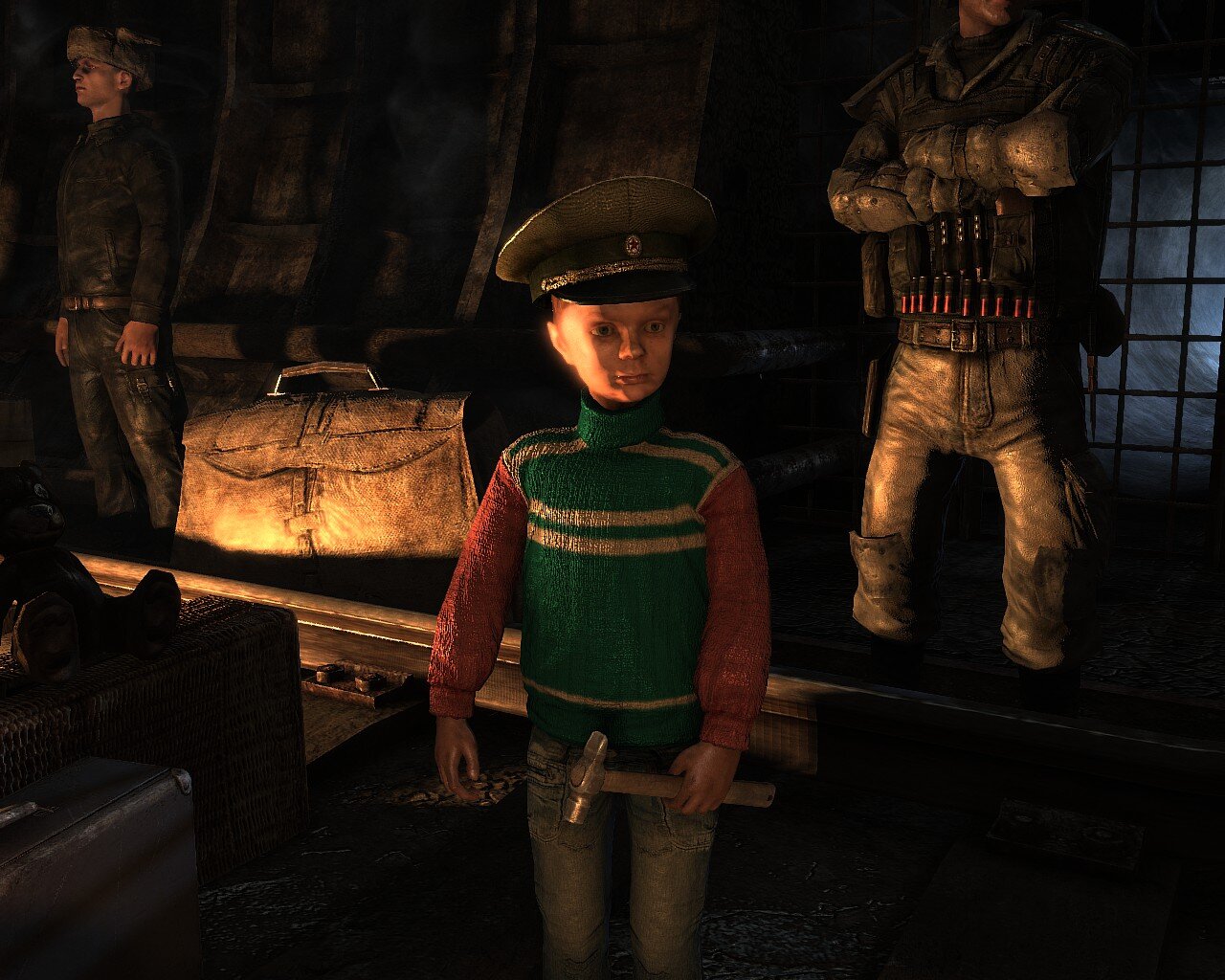
Baby Lenin can’t find his sickle; this is not just another fetch quest!

Baby Lenin can’t find his sickle; this is not just another fetch quest!

Metro: Last Light would be substituted for 2033 if the ranger hardcore mode had not been DLC—as a result, I am yet to play it as it ought to be played. No matter how endearingly quaint the very Russian philosophical and political ruminations of Last Light (the author of Metro novels had a greater role in the writing of Last Light than he did with 2033; eventually turning his unused ideas for Last Light into another Metro novel!) and how cutely the metaphysical themes were personified in an adorable little darkling, Last Light simply could not compete with Metro 2033 without its own version of ranger hardcore mode.

Metro 2033, played on ranger hardcore, is the greatest stealth game of the decade (MGSV may be a better action game, but it never quite reached the heights of the Metro series’ stealth). The margin for error is almost zero: stand on broken glass, miss a knife throw, or breathe too near an enemy, and you’re probably dead. To make it through a level alive, the player is forced to plan out a complicated choreography of hiding and sniping, paying careful attention to the number of throwing knives available. And yet there is still some room for improvisation, resulting in some of the most frantic moments of quick thinking in any game, let alone a first person shooter, if you are not instantly killed for exposing yourself but given a chance to fight back or flee.

2033’s use of light and shade will always be breath taking.

2033’s use of light and shade will always be breath taking.

And as a first person shooter based on survival, it is nearly as intense an experience. Not only must all your ammo be counted and each shot made to count, if you are using a weapon with recyclable projectiles (and you will be if you want to survive until the end of the game), then you must also risk discovery by sneaking up to corpses to recover your unbroken gas gun bolts.

As often as not, whether sneaking or shooting, being equally careful not to suffocate by running out of gas mask filters; any area with irradiated air is a terrifying experience!

No other stealth game requires such meticulous planning and no other survival game is as much about memorisation and self-discipline as Metro 2033 is—two elements that really should be, but often aren’t, fundamental aspects of those two genres.

I don’t remember who the hell this is, but I do remember that painting!

I don’t remember who the hell this is, but I do remember that painting!

While my list gives no credence to influence, it’s worth remembering that two of the most well-received triple-a narratives this decade (The Last of Us and Wolfenstein: The New Order) owe a great deal to the Metro series, or at least followed in its footsteps. 2033’s combination of stealth, action and survival to explore serious themes may not be as personal as The Last of Us, but it is a direct precursor: a stepping stone from Metal Gear Solid to TLOU. The relationship between the Dark One and Artyom is not unlike the relationship between Joel and Ellie, albeit far less deep (though deeper in terms of its effect on gameplay, and certainly more philosophically interesting!); and the relationship between Artyom and Anna—with a touch of intrusive Oriental humour—predates the romantic relationship in Wolfenstein: The New Order. In Exodus this relationship is explored in more detail, with The New Order perhaps encouraging 4A games to in turn take what they started a little more seriously!

Yet even without ranger hardcore mode, Last Light will remain with me forever as a strangely meditative experience, nearly equal to S.T.A.L.K.E.R.: Shadows of Chernobyl. The ultimate hollowness of the themes it raises and the questions it asks then fails to answer—in a typically oriental manner—allows one to project whatever one pleases into the experience in a way that other shallow explorations of deep themes do not—Blade Runner immediately comes to mind, which undercuts its meditative atmosphere by focusing on a thematically meaningless mystery whose answer, while never given, allows for no projection and is revelatory if answered by the audience only in terms of plot; this is also in stark contrast to its source material which, while also ambiguous, is not concerned with the unanswered mysteries of plot, but the unanswerable mysteries of God.

Just reach in and grab your gas gun bolts!

Just reach in and grab your gas gun bolts!

Fuck it, maybe Last Light should be here, after all! I’ll retract my opening paragraph and leave this as an open question: pick either Metro mentioned here—or maybe even Exodus!

6 Life Is Strange

Remember Me, clearly inspired by the likes of Moebius, Kubrick, Bilal and Dick was gorgeous from beginning to end; but it was in its most abstract moments where it blossomed into something truly special; albeit still borrowing heavily from Escher an…

Remember Me, clearly inspired by the likes of Moebius, Kubrick, Bilal and Dick was gorgeous from beginning to end; but it was in its most abstract moments where it blossomed into something truly special; albeit still borrowing heavily from Escher and Kula World! The soundtrack is also like a slightly more orchestrated, slightly more poppy version of Eufloria’s ambience, though not quite a sgood.

Life is Strange is strangest if you have played Dontod’s first game, Remember Me: a beautiful, super-polished, high-budget beat ‘em up in the vein of Batman (the combat is almost identical), taking place in a highbrow science fiction setting which nearly successfully disguises the pulpishness of the plot. This strategy is reversed in Life Is Strange: a janky, low-budget adventure game with an ostentatiously pulpy plot and lowbrow setting doing its best to make mass-marketable a weirdly authentic bildungsroman and a totally original gameplay hook—a time travel mechanic allowing you to explore all possible dialogue options, which is also written very well into the finale as the super power becomes self-destructive.

Life is Strange also inspired a lot of fan art. This example by Cassio Yoshiyaki is notable due to not being softcore lesbian porn. Kate Marsh was also one of the most interesting characters, and her subplot was excellent.

Life is Strange also inspired a lot of fan art. This example by Cassio Yoshiyaki is notable due to not being softcore lesbian porn. Kate Marsh was also one of the most interesting characters, and her subplot was excellent.

Inspired by Twin Peaks, Max returns to a seemingly idyllic yet downwardly mobile small American town to expose the rot at the core of American kitsch while also having her big city sensibilities challenged by the responsibilities and sense of community she discovers—she also witnesses the murder of the best friend from her past life, at which point she discovers her ability to rewind time and thus alter the future. While the surreal elements have, like her superhero power, some lyrical qualities, they are mostly decorative; and, unlike Deadly Premonition, the influence of David Lynch is, at best, window dressing—at worst, a cynical marketing ploy to make the low budget aesthetic easier to swallow. But, like David Lynch (and yet again unlike Deadly Premonition), the exploration of human relationships is painfully authentic.

Much has been written about the relationship between Max and Chloe, but the most interesting relationships in the game are the familial relations between Max, Chloe and her mother and father-in-law. Max, being Chloe’s bestest childhood friend, is all but the niece of Chloe’s mother, and her veteran (read: traumatised by the dehumanisation of basic and thus unable to cope without comrades to lose himself in shared victimisation and a paternalistic ruler to free him from the very same victimisation that they initiated, allowing for the total submission to another’s will and the relinquishment of all responsibilities) father-in-law has neither the social skills nor the patience to deal with Chloe who, in turn, has been unable to cope with the death of her “real” father. They’re also struggling to make ends meet—her mother a waitress, and her father a security guard at Max’s school.

Life is Strange’s menus don’t hold a candle to Papers, Please, but they do complement the main story nicely.

Life is Strange’s menus don’t hold a candle to Papers, Please, but they do complement the main story nicely.

In spite of everyone’s best intentions, it is an inherently tragic situation and, while seemingly being but a background element, forms the bedrock of both the plot and the themes of Life Is Strange. Sure, there’s a serial killer on the loose, an incoming metaphysical storm, and Max keeps getting nose bleeds, but what really matters is whether Chloe’s step dad can find a way to show Chloe that he cares for her, that Chloe can come to terms with her father’s death, that her mother can find a way to support both her husband and her daughter who are floundering due to trauma and grief while navigating their jealousies and the trials of wage slavery, and—most important of all—that Max can find a way of gently friendzoning Warren.

With as authentically a tragic depiction of human relationships as this, the hella awkward dialogue and jankiness of the gameplay become endearing—through pity and empathy one can’t help but to love Life Is Strange not in spite of its failings and foibles, but because of them: what else does pathetic humanity have to cope in the tragedy of life but empathy and pity? Wowsers!

5 Sky: Children of Light

As well as posing to placates spirits, one also needs the help of others to burn funguses, which allows you to produce more candles to burn more fungus with. I assume the candles in Sky: Children of Light must be made of fungus, or the whole candle …

As well as posing to placates spirits, one also needs the help of others to burn funguses, which allows you to produce more candles to burn more fungus with. I assume the candles in Sky: Children of Light must be made of fungus, or the whole candle wax economy doesn’t make much sense.

Regular listeners of the Game Under podcast would know that I am an occasional churchgoer (and also, I hope, infer that in spite of this I am probably not religious); the very fact that one may enter and leave churches as one pleases with no one batting an eyelid makes them a strangely subversive institution in a society built on property rights. The inheritor of cultural communal property (at the discretion of the owners) is the shopping centre, and once one is in a shopping centre one is beset with even more propaganda than a church’s stained glass windows, friezes, icons and cross-inspired layout; all of which are a mesmerising, dreamy—rather than hypnotising, nightmarish—aesthetic experience.

But best of all, in my lifetime at least, one may enjoy the unique experience of being alone in a public place if one wanders into a church. Even if one has company, then it is likely to be the church’s organist practicing (Sky: Children of Light features musical instruments, and shockingly it’s not rare to run into another player improvising, in spite of the total commodification of art and thus the cultural rejection of performing music as a communal activity!), or a volunteer running the museum alcove in churches of historical importance. In a shopping centre one is drowning in a sea of stressed-out shoppers, advertisers offering free samples of things and charities begging for donations and the only musical accompaniments are the insufferable offerings of top of the pops or muzak. Unless one visits at night, in which case they are nearly as wondrous entities as churches, and blessed with many more mysteries! In silent isolation, not unlike churches, they even develop their own fascinating acoustic ambiences.*

I’m the one dancing; who the others are, I’ve no idea. Sky’s soundtrack is also every bit as good as Journey’s.

This may be why I did not enjoy Journey, at all. Jenova Chen was once interviewed by a priest who used Journey and Flower in active Christian worship exercises; on learning this, Jenova Chen commented that when he analysed That Game Company’s business model, he realised that they were working in the social service industry: Journey provided an experience in which one could trust other people; a rare feeling for gamers. However, in my own experience, while one was certainly not threatened by the presence of other players in Journey, one gained nothing from meeting them, pragmatically or personally; indeed, the mysteries of the desolate landscape of Journey became with the presence of others a church filled with people, and people filling a church obscure its architectural and, indeed, its spiritual marvels.

Sky: Children of Light is more like a shopping centre than a church. Full of useful and aesthetically pleasing things to collect, it is structured on the basis of material gain by motivating one to improve one’s status through the purchasing of expensive and/or fashionable clothing as well as useful or flashy accessories while simultaneously offering the perfect venue in which to show off the clothes one is already wearing and the accessories one is using. Hard work is rewarded in the same way it is in reality: very, very slowly; though it can eventually begin to build up (and even snowball with the right network!). Or, alternatively, if you are rich then you can skip the hardship of manual labour and buy the fanciest outfits without wasting hours of your life working your thumbs to the bone.

One way of making a candle without much effort or time invested is by hitching a ride on a random player in the Valley’s race! It’s all about the grind…

Yet this creates a strange sense of community. While one is not guaranteed to find help when one needs it, no one seems to be particularly annoyed by a player calling endlessly for assistance in opening a multi-player door so they can collect a few extra blobs of wax, and more often than not people are willing to help—at least when there is a reasonable reward on the other side of the door. The better one dresses oneself, the greater the contrast between one and newer players but, for me at least, instead of fostering a sense of superiority, one ends up feeling compassion for noobs (whose antics not based on collecting as much light as quickly as possible are often amusing to behold) and thus, unlike in many games, when a newbie appears and randomly befriends oneself (not realising the value of candles!), one might actually take them by the hand and lead them through the level, showing them where all the candles, winged lights and spirits are! And it probably isn’t just me who indulges in charitable works from time to time; when I was a newbie, savvy players in fancy outfits routinely helped me out—an experience unlike any other MMO I’ve played (though Koreans were usually surprisingly generous and helpful compared to their Japanese, European and Anglo comrades in other MMOs; perhaps because Koreans live in the closest thing to a micro-transaction economy this side of China).

That one can’t talk to other players unless one spends many candles on one’s friendship constellation or has a very expensive item that allows one to talk to random players also helps to make interaction with friends a very interesting experience. By the time one ends up talking to anyone, one is likely to have known them for some time, making talking to them for the first time an exciting experience, rather than a boring exchange of online platitudes (A/S/L?); even when one is talking to a group of people, there are usually one or two people who know each other very well, making breaking the ice a little less awkward! (Plus, friends of friends are usually very eager to befriend one another.) And even if one does talk to a stranger, it is usually a similarly exciting experience due to its rarity, although slightly more awkward and closer to A/S/L etiquette of standardised online interaction.

A relaxing, ritual suicide by drowning with randoms.

A relaxing, ritual suicide by drowning with randoms.

It is fascinating that, counter-intuitively, That Game Company has ended up making a much more wholesome community experience than Journey—which used the standard, less exploitable one-time payment strategy—in a game clearly structured around encouraging potentially exploitative in-game spending as its business model. But maybe it is their very exploitation and alienation that attracts teenagers to the carnivalesque horror shows of shopping centres: the desire to enrich one’s self materially and marinate in the envy and jealousy evoked by window shopping becomes the shared-suffering doorway to a spiritual connection to one’s peers**, just as, in reverse, a church’s spiritual beauty encourages the severance of one’s connection to other people and it is only in the shared punishment of a priest’s acerbic tongue that the community is put back together through a shared sense of sin.

I am reminded of another interview, this time regarding the Souls games. The inspiration for the Souls series’ strange online system—which clearly influenced Sky: Children of Life—was Hidetaka Miyazaki’s experience of adverse circumstances encouraging communities to rally together. The result was, on the contrary, one of the most immature and unhelpful communities in gaming: git gud, scrub! But, then, the Souls games are like Journey: they are churches, not shopping centres; no matter how melancholy, they are things whose architectural souls are beautiful and pure: other people merely dilute that beauty with sin. Sky: Children of Light, on the other hand, is as horrific and impure as it is beautiful: other people give it its humanity, not a god or its own aesthetic sensibilities—just as the redemptive and entrancing mystery of empty shopping centres at night is the fundamental absence of other people, and the joy in such an architectural experience is not in the architecture itself, but in observing and meeting the people stacking shelves and the tradies renovating—it is the little angels to whom we owe our heaven on earth who reveal the beauty that lies beneath the vulgar surface of shopping centres***; in Sky: Children of Light, anyone who has paid their dues for or bought a useful uniform may stack the shelves and renovate the shopfronts to improve the lives of other players.

Admittedly, I only know two of these people.

Indeed, if Sky: Children of Light has taught us anything, it is that “late-stage capitalism” needn’t be a boring “hellscape”—at least digitally; alienation, it turns out, is the key to turning strangers into friends: the immediate intimacy of social media is proof enough of that! (Or a caption above the final section? Probably a caption!)

*One night I must try singing in one!

**More likely, or in addition to, it is simply because shopping centres are the one public venue where teenagers are allowed the same freedom of movement as adults.

***Or, conversely, accentuate the conspicuous absence of others.

Tom Towers' Top 10 Titles of the Twenty-Tens (10-8)

Read on to discover why this picture shows how Omikron: The Nomad Soul could have been even better!

Read on to discover why this picture shows how Omikron: The Nomad Soul could have been even better!

In composing my top 10 list for games released between 2010 and 2019, my only criteria was that I remembered the games that would make it. Even so, I had to look back through my finished games list at thevgpress.com to remind myself of what games I’d played! The threads containing said lists do not go back to 2010, so some games may have missed out (but when you look at what games came out in 2010, that’s unlikely).

Nevertheless, while I may not have been able to recall what games I played over the last decade without prompting, these are the games that have permeated my subconscious and thus become a permanent part of me.

This absolute filth is easily the best third person shooter since Gunstar Heroes (though Hotline Miami is a big contender from this decade), but it makes me sad that I couldn’t figure out how to shoehorn in Binary Domain or any Nagoshi [Japanese] ga…

This absolute filth is easily the best third person shooter since Gunstar Heroes (though Hotline Miami is a big contender from this decade), but it makes me sad that I couldn’t figure out how to shoehorn in Binary Domain or any Nagoshi [Japanese] game into my top 10. If not for my silly rule detailed above, Yakuza Kiwami 2 (without having played it) would have been the perfect choice!

I also excluded remakes and remasters of games that originally came out earlier, so alas MDK2, Another World, Beyond Good and Evil and Dear Esther were disqualified; the fore and lattermost of the list would probably have made it.

The former, unlike any other third person shooter, managed to achieve what the best first person shooters do: be a hallucinogenic experience, which would probably have put it above Hard Reset as the most hedonistic game of the decade; if Hard Reset’s aesthetic was an acid trip, then MDK2 HD with its filthy hues of rusted metal and vomitus projectiles and explosives—not to mention the latex bodysuit worn by one of its protagonists—was the physical and psychological humiliation of a dominatrix.

Eustacia’s bonfire burns even as she falls into the weir!

Eustacia’s bonfire burns even as she falls into the weir!

Conversely, the Dear Esther remake is the only game to live up to the name of the genre it helped invent by literally simulating the joy of a countryside stroll; making it a solid replacement for any of the more ascetic games on my list. The narration, due to its ambiguous obscurity is really little more than the conversation of someone whom you are promenading with: you are here to enjoy the scenery, and the only game with greater scenery is the original S.T.A.L.K.E.R.—but unlike the original S.T.A.L.K.E.R. you are never in any danger, and may explore at your own leisure with no interruption except that of the narrator; a slightly less intrusive narrative voice than the force that was time in Proteus—another contender in this category.

There were also several games that did not make the list that deserve mentioning as examples of pure personal expression: To the Moon, Duskers, Fran Bow, Cibele and Sunset; the last two, much like my favourite game of the decade, grew on me the more I thought about them so that they are now two of my favourite games, in spite of me being only impressed by the former’s technique and the latter’s sheer audacity at the time. We also mustn’t forget the just plain weird, like Zeno Clash, Hyperdimension Neptunia: Victory, Wattam, Papo & Yo and Untitled Goose Game!

Due to my own failings, I had not played enough Assetto Corsa or Dirt Rally [2] for them to be in consideration for the list, so no racing game was a genuine contender; but I had played enough of what was arguably the second best game of the decade and also the second best game not to make my list, Rocket League. Not so much a car game as a genuinely realistic simulation of indoor soccer. Some have compared it to basketball, but the joy in Rocket League comes from the awkwardness of hitting the ball around, not the ease with which a ball may be thrown; thus making it closer to the much more difficult sport of football: a difficulty which allows for players to show off some truly sublime simulated ball skills—in indoor soccer, or futsal, the Harlem Globetrotters of the sport are the best players not circus performers.

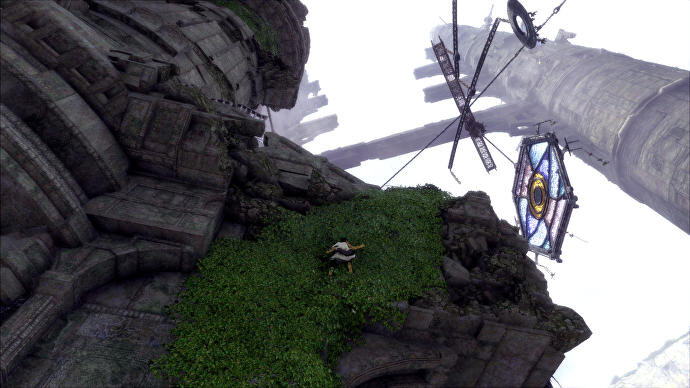
And last, but not least, though it didn’t make the final top 10, The Last Guardian must be mentioned.

The incompleteness of some of the platforming’s visual logic actually ended up emphasising how surreal Ueda’s vision was.

The incompleteness of some of the platforming’s visual logic actually ended up emphasising how surreal Ueda’s vision was.

In a decade dominated by the indie scene and the narrative (and to a degree even creative) freedom it encouraged in triple-a development, there is arguably no other game in history that is such an astounding achievement of the relationship between triple-a developers and the publishers without whom they could not exist. Nearly a decade in the making, Sony did not give up on Fumito Ueda, instead allowing him the time and money needed to complete his vision; and he more than repaid their faith. A technological mongrel of a game, The Last Guardian nevertheless managed to be a satisfying ending to what is without question the most powerful narrative in videogames ever; and one of the most powerful narratives of its age in any medium.

So it is without question that The Last Guardian is the greatest achievement of this decade and, if it weren’t for The Man Who Killed Don Quixote, it would be the greatest achievement in a collaborative commitment to storytelling of the decade in any medium! Yet it does not make my list because to put it any place but first would be to do it a disservice, and in spite of all rational arguments that may be made to the contrary, my number one choice has permeated my consciousness to a greater degree than The Last Guardian did; it would win, just barely, even if my list could include games that weren’t released this decade (which would result in most of the other games on my list being replaced)!

Bowie’s part was originally intended for Björk, but sadly David Cage was talked into seducing Bowie instead. Someone probably pointed out that if he included a nude model of Björk in the game she might have killed him, whereas Bowie would have simpl…

Bowie’s part was originally intended for Björk, but sadly David Cage was talked into seducing Bowie instead. Someone probably pointed out that if he included a nude model of Björk in the game she might have killed him, whereas Bowie would have simply found it endearing.

That is not to imply it has been a bad decade, but it’s hard to compete with the likes of Omikron: The Nomad Soul, which was surely the first game that allowed you to urinate in a virtual toilet!

10 Hard Reset

Like Tetris, Hard Reset doesn’t look like much without you playing it, so here’s a cartoon of a naked lady without nipples.

Like Tetris, Hard Reset doesn’t look like much without you playing it, so here’s a cartoon of a naked lady without nipples.

While I have never taken any hallucinogenic or psychedelic drugs, I have never needed to to hallucinate or be entranced by geometry, so I am somewhat confident in saying that playing Hard Reset must be what playing Tetris on acid is like.

First person shooters, like Tetris, are hypnotic experiences. They force the player to focus on a very small field of vision then follow in that small field of vision a very limited number of visual stimuli; success is the disappearance of the repeated elements placed in this limited field of vision: the crumbling of Tetris blocks or the death of enemies. The only difference as a visual experience between Tetris and first person shooters is that the backgrounds of first person shooters are more varied and elaborate. All the better to hypnotise the player and induce hallucinations with!

But even so, it does look alrigtht; just like Tetris!

But even so, it does look alrigtht; just like Tetris!

If Metroid Prime—the greatest first person shooter ever—induced meditative hallucinations including not only the appearance and death of enemies, but even the backgrounds in which they appeared and died, then Hard Reset is more like the psychedelic and abstract metaphor for evolution in 2001: A Space Odyssey—yet even more intense; a weird blending of all the elements in the game, both background and the enemies superimposed over the background, running together into blended colours that are neither the background nor the animated foreground!

This makes for an unending kaleidoscope of various shades of neon blue, red, yellow and silver all dancing together in a mesmerising harmony courtesy of the combat’s mixture of both forward and backward momentum (whereas Doom, both the reboot and the original, have you moving almost always forwards and Serious Sam almost always backwards!)—this is a colour organ whose productions are as beautiful as you are able to make them. For the best results, make sure to raise the difficulty and run around as erratically as possible, first furiously into battle, then just as furiously into an improvised retreat—both to give you the greatest chance of survival, and also the most beautiful collision of colours.

9 Papers, Please

Spoiler alert: but the end of day summaries best illustrate the beauty of Papers, Please, and the only picture of it I had at hand was of the final day!

Spoiler alert: but the end of day summaries best illustrate the beauty of Papers, Please, and the only picture of it I had at hand was of the final day!

One might be tempted to talk about how there are more refugees in the world today than there were during the second world war, making the theme of Papers, Please fascinating and timely. But that would be a political analysis, and Papers, Please goes out of its way to avoid political themes, as most artworks today do; in spite of accusations to the contrary by critics and enthusiasts who gladly embrace subjugation by endorsing the substitution of morality for politics.

Set in a fictionalised member state of the Soviet Union, Papers, Please contains no commentary on the brutality or economic achievements of the Soviet empire, but it does present the player with increasingly more interesting moral quandaries to solve—but this is not why I love Papers, Please.

Papers, Please, looks deceptively uninteresting outside of its text-heavy screens, so here’s a picture of the always beautiful Eufloria instead!

Papers, Please, looks deceptively uninteresting outside of its text-heavy screens, so here’s a picture of the always beautiful Eufloria instead!

Aesthetically, Papers, Please is a masterpiece. Every action is accompanied by a perfectly-timed sound effect, both reinforcing the player’s actions as well as rewarding them due to the satisfaction of the actions themselves, and creating a sense of tactility unmatched by anything other than Gran Turismo’s delectable menus. The navigation between separate screens transports one to different worlds: personal interaction with those who the player holds power over at the border checkpoint and the bureaucratic process which holds power over the player, nicely emphasising one of the most important yet oft-forgotten elements of disassociation and dehumanisation: the legalese and rituals of the bureaucratic process!

This may sound dreadfully simple an aesthetic achievement—it is. Papers, Please pips *Eufloria as the most beautiful minimalist game of the decade. One can practically smell the ink on the stamps, and the vodka on the breath of the migrants; it’s amazing how redolent a few hundred pixels and a few well-timed sound effects can be!

The Eufloria soundtrack is also probably the best of the decade; but you just can’t beat quality menu navigation when it comes to videogame minimalism! Plus, only the console port came out last decade.

8 Deadly Premonition

I bet that even this was a deliberate surrealist flourish!

I bet that even this was a deliberate surrealist flourish!

Deadly Premonition is a litmus test for aesthetic, literary and gameplay taste in games. If someone likes Deadly Premonition because they think it’s so bad it’s good, they are revealing themselves to be a self-isolating ignoramus. If someone likes Deadly Premonition’s narrative because they believe its irony is accidental, rather than the result of a meticulously designed post-modern digital decollage*, they are an illiterate philistine. If they think that aesthetically and thematically it is a masterpiece, but the gameplay sucks, then they are a middlebrow moron.

Not only did SWERY manage to take the work of someone who symbolises auteur genius in the modern film canon (David Lynch) and cut away its surrealism and pop sensibilities until it was even more idiosyncratic than the source material—if not quite as original—he also made a damn find sandwich of a game in the process, filled to overflowing with eclectic ingredients few would think to combine, yet ones that complement one another surprisingly well.

In the trippy finale, the random levitation of character models really did complement the atmosphere!

In the trippy finale, the random levitation of character models really did complement the atmosphere!

While both the Grand Theft Auto-style mission design and structure and tank-style horror levels (in place of GTA-style shoot ‘em up segments) lack the originality and skill of the narrative and aesthetic, the combination of the two is not only original, but more seamless due to the narrative and setting than the awkward mix of shooting, driving and cutscenes in Grand Theft Auto-proper. (But if we’re being honest, it is only inferior to Grand Theft Auto mission and world design in terms of its stiff mechanics and scope, respectively. And if one really thinks about it, its mechanics are “technically” superior to all 3D GTAs with the exception of V, anyway! Let’s also not forget that GTAV is an awful mess in how it tries to synthesise its technically complex mechanics and simplistic world and mission design!)

Even more impressive, the open world itself is an achievement surpassed only by the S.T.A.L.K.E.R. series. The characters go about their daily activities as you play, and if you take the time to stalk them (err, I mean be a good detective), you not only flesh out their backstories and learn little titbits that contribute to the narrative, but you can actually figure out who the serial killer is long before the plotting as it unfolds in the main storyline intends you to.

It’s not immediately apparent why I took this photo, and I certainly don’t remember why I did either. Maybe I’ll remember if I pay close attention to my next cup of coffee…

It’s not immediately apparent why I took this photo, and I certainly don’t remember why I did either. Maybe I’ll remember if I pay close attention to my next cup of coffee…

As a mystery, it is Lord Edgar Allan Poe not Sir Arthur Conan Doyle in that the joy is in you figuring out stuff yourself and if you are particularly astute, you will figure out things before the author openly reveals them—the protagonist is not the detective, you are!—and the author is not interested in showing off how smart his protagonist is, but in giving you a literary puzzle to solve (and thus showing off how smart they themselves are by coming up with a difficult, yet solvable, mystery).

And that’s not even taking into consideration the triple threat that was Riyou Kinugasa, Takuya Kobayashi, and Hiromi Mizutani’s magnificent soundtrack!

*I will admit my main motivation for referring to Deadly Premonition as decollage, not collage, is the alliteration, but I think it is also a fair description of SWERY’s technique. In many ways the disparate elements of Deadly Premonition do not feel as if they have been combined to form an aesthetic whole like the elements of most collages, but cut out of their source material to make de-contextualised juxtapositions instead, much in the manner of a decollage. But it is also true that the elements of David Lynch, GTA, Silent Hill and the cannibalistic sensibilities of indie cinema that have been whittled down to suit SWERY’s needs are then combined in the manner of a collage so, really, it’s both: a collage of decollages!

Phil Fogg's Favourite Games of the Decade

Numbers.jpg

Phil Fogg proves, once again, that if Tom Towers ghostwrote his content both on and off air, his face would be freer of egg: without spoiling anything, the game Tom advised Phil to award GOTY to over what actually won it that year has been named the best game of the decade, and the game that beat it for the GOTY has not even made the top 10!

But when Tom Towers’ milks the last decade for all its worth with his own list, the winner will be an even weirder choice considering that it only scored 3.5/5 when he reviewed it!

However,this is Phil’s list, not Tom’s, and it’s one well worth taking a look at!

Reward your eyes with numbers by clicking here.

Game Under Podcast Episode 120

Dante, Vergil and Nero.

Dante, Vergil and Nero.

In Episode 120 of the Game Under Podcast, Tom Towers is joined by Aarny to discuss what many believe is the greatest beat up action characters, slash and burn, beat ‘em off games ever, Devil May Cry 3.

How many people can be wrong—two, or everyone—or do the two (Aarny and Tom) agree with everyone (Gagan and Vader)?

Click here to find out!

N.B. There is no way to compare stats with other players on DMC5, and Gagan has only played 4 on Steam for 40 minutes and DmC for a few hours, so at this stage, we’re all poseurs.

The Cynical and the Dead: 11-11: Memories Retold’s Fascinating Bad Endings

Edith Schiele on her Deathbed.jpg

Yoan Fanise’s second game flew under the radar, in spite of the success of Valiant Hearts: The Great War. I suppose that’s the difference between publishing with Ubisoft and Bandai Namco. Nevertheless, it turned out to be a far superior story, albeit an inferior game.

Its endings, in particular, proved to be one of the rare occasions where the bad endings were logical and satisfying conclusions to the narrative. One, in particular, was also (perhaps unintentionally) one of the most cynical explorations of war in any medium.

So I, Tom Towers, wrote something about it, which you can read here.

Pokemon vs the Vatican

17-The-pope-pokemon.jpg

In the last episode of the Game Under Podcast, Phil Fogg claimed that Pokemon is the most valuable intellectual property. Tom Towers countered that this was a ridiculous claim, as pretty much any religious IP would be of significantly greater value; suggesting that even the Vatican alone would be worth more.

While anyone with even the foggiest notion of history will be able to tell you that the Catholic church—let alone the myriad other Judaic* spin-offs—is far more valuable than any non-religious IP, let us take a closer look at the value of Vatican City itself in comparison with Pokemon.

Unfortunately both Pokemon and the Catholic church are secretive organisations, so no one actually knows how much either are worth. In the case of the Vatican, Time magazine estimated that it had a net worth of 10-15 billion. This is a similar number to the 15 billion net worth figure reached by Money Inc. for Pokemon, based on a 2014 unnamed source that claimed Pokemon made 1.5 billion a year.

593-posts.article_lg.jpg

The Vatican has a yearly revenue of 308 million according to the CIA, which doesn’t sound very impressive until you realise that the Vatican only has a population of 800 odd people, making it the smallest (yet 18th richest) country in the world. Also, if we apply the same statistical analysis that Money Inc. did to their unnamed source, then since its founding in 1929, the Vatican has accrued a total net worth of over 28 billion, making it is nearly twice as valuable an asset as the Pokemon franchise.

And even that is a mere sliver of the Catholic Church’s total wealth. In Australia alone, the Catholic church probably owns 30 billion dollars worth of property!

*Some might argue that like for like figures aren’t being compared (due to the secrecy of the IP owners involved), but let us compare the total revenue earned by Pokemon since its conception (1996) and Israel since 2001: approximately 95 billion for Pokemon, while Israel with a five year handicap still made over ten times that: approximately 972 billion!

In the same episode, Phil Fogg also foolishly claimed that the Catholic Church would put more effort into making a game than Game Freak did with Sword and Shield. I’ll let you be the judge:

Game Under Podcast Episode 119

d07.png

Tom and Phil discuss how they came to their final list of the top ten games of the 2010’s and then talk about the recent release of Halo: Reach for the PC, Pokemon Shield for the Switch and also Gears 5 for Xbox One and PC. Tom also give his first impressions of Fortnite.

We also ponder who has the most money, the Vatican or The Pokemon Company.

Please look forward to Episode 119 of Australia’s longest running video game podcast.

Game Under Podcast's Top 10 Games of the 2010's - Number 1

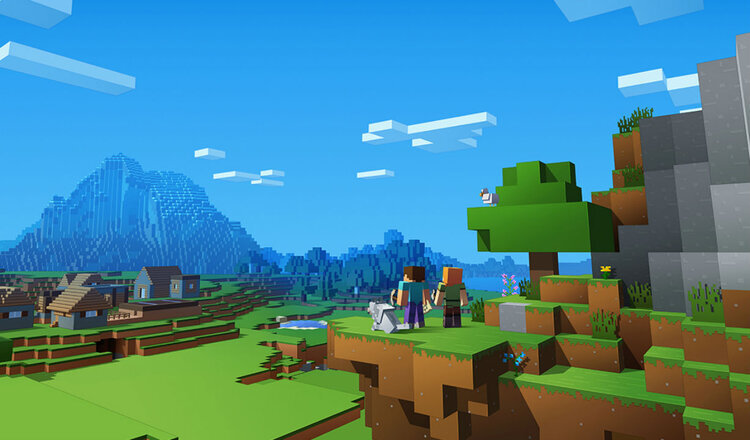
1. Minecraft

Mojang, 2011. Most Platforms. Sandbox
The fact that Minecraft is the best selling video game of all-time is not reason enough for it to top our list of the Top Ten Games of the 2010’s. If it were none of the other games on this list would have made it (none were among the ten best selling games of the decade). Minecraft is lightning caught in a bottle, a small game made by what some regard a mediocre coder, Marcus Persson, who had dabbled in Doom-mod games inspired by Dwarf Fortress and Dungeon Keeper. Much as Will Wright had more fun with the development tools he created for The Raid on Bungleing Bay than playing it, and then went onto develop the crafting game SimCity, “Notch” must have identified that people would have more fun with the creation tools of Minecraft than a directed experience game.

Notch used assets from his prior experiments in game develop to Minecraft, including the now iconic pixelated sword.

Notch used assets from his prior experiments in game develop to Minecraft, including the now iconic pixelated sword.

SimCity eventually became known as the first form of interactive electronic gaming that was a “toy” rather than a game, somehting that could be picked up for as long as the player wanted and relied on their drive and imagination, more so than a linear game that sets milestones and waits for the player to reach them. Minecraft, like SimCity, does have a “proper campaign” but I’ve never met anyone who has actively engaged in it, eschewing it for the far more meditative process of crafting, minecrafting if you will. The game has added different variants over the years, especially under the patronage of Microsoft, which took over Mojang studio in 2014, after Notch tweeted that he no longer wished to bear the pressure of Minecraft and “move on with his life”.

minecraft-mods.jpg

It seems to have been a good move for both Minecraft and Notch, as Microsoft has enabled the unification of the many platforms the game appears on so players can interact regardless of what device they are using, contrary to the exclusivity many feared when Microsoft bought out Mojang.

As an older gamer, with limited time, I’ve not been able to dedicate myself to a single game like Minecraft, but thinking of myself when I was child who was endlessly pursuing programming and anything related to creativity, I can see why all of the children I know are enraptured with Minecraft. As they have aged and moved onto other games, their interest in creation remains, particularly computer enabled design, and to me that is the legacy that Minecraft can be most proud of.

-Phil Fogg

That’s an enchanting table.

That’s an enchanting table.

Minecraft is a game I’m convinced I bought when it was extremely cheap to pre-order. This was without me knowing anything about it. Then people started to make blogs on GameSpot about it, and I could find no evidence I had purchased it. Did I imagine I bought it, or did Notch scam me? This can be taken as metaphor for Minecraft itself, a game which so defies description beyond its title (you mine and then you craft using the raw materials you have mined) yet is so ubiquitous, that it may not actually exist.

The fact that a game which no one at any point since its release nine-years ago has been capable of describing has proven to be so popular and been just as, if not more, important to the rise of streaming, YouTube personalities and post-forum online gaming communities than MOBAs, horror games, fascism or feminism (and it is also a horror game thanks to its infamous creepers, not to mention its creator’s fascistic tendencies!), would make it more than worthy of being the game of the decade. But for me, as someone who has never played Minecraft, what I believe to be its most significant achievement is its art direction. It proves that indie developers and idiots with no aesthetic appreciation are wrong: pixellated graphics can be just as successful in 3D games as 2D games. In fact, the highest selling game ever was released in the 21st Century and has graphics as chunky as the SEGA Saturn!

So the next time some philistine is calling the original Metal Gear Solid’s graphics dated rather than noticing how incredible it looks—not to mention the editing and framing in the cutscenes!—just remember how successful Minecraft was and is.

I will admit that the ray tracing shaders for it look pretty good, though.

-Tom Towers

To see our full feature on the Top Ten Games of the 2010’s click here.

Game Under Podcast's Top 10 Games of the 2010's - Games 4,3,2

4. Pokemon Go!

Niantic, 2016. Mobile. Augmented Reality, Location-based Game
In retrospect, the success of Pokemon Go! now seems obvious. Take a ubiquitous platform like the smart phone, licence the highest-grossing media franchise in the history of the planet (Pokemon), and release a game that is so novel in nature that it will generate massive amounts of free press and promotion. But perhaps to the developers of the game, US-based Niantic, success did not seem so assured.

pokemon_go_6.png

Having already made a couple of location-based augmented reality games, they received avid attention from those that played their games. In the case of Ingress, a game that provides the framework for Pokemon Go!, they had also received negative attention for some of the unforseen consequences of combining real locations with fictional augmentation – including tragically the death of at least two players.

Ingress, however provided much needed user experience stats (telemetrics – sigh) and location trend information that made Pokemon Go! Successful. In the game you must traverse actual locations with your GPS-enabled smart phone to locate Pokemon and capture them, though a fairly simple flicking motion. You can play the mode in augmented reality (AR) mode where by using the forward facing camera on your smart phone you can see the Pokemon in the environment before you. Not developing this game first for Hideo Kojima, famous for Metal Gear Solid but also the maker of Boktai:  The Sun is in Your Hands - -a game that made you play in the Sun, as well as Death Stranding, a game that used telemetrics as a influence on world design seems like one of the top ten lost opportunities of the 21st Century. But I’m not his agent, nor his business manger. Thank God.

pg.jpg

Pokemon Go!, incredibly, was first conceived as an April Fool’s Joke from the President of Nintendo, Saturo Iwata, and went on to be one of the best selling games of all time, and continues to support millions of users across the globe giving it place on our Top 10.
- Phil Fogg

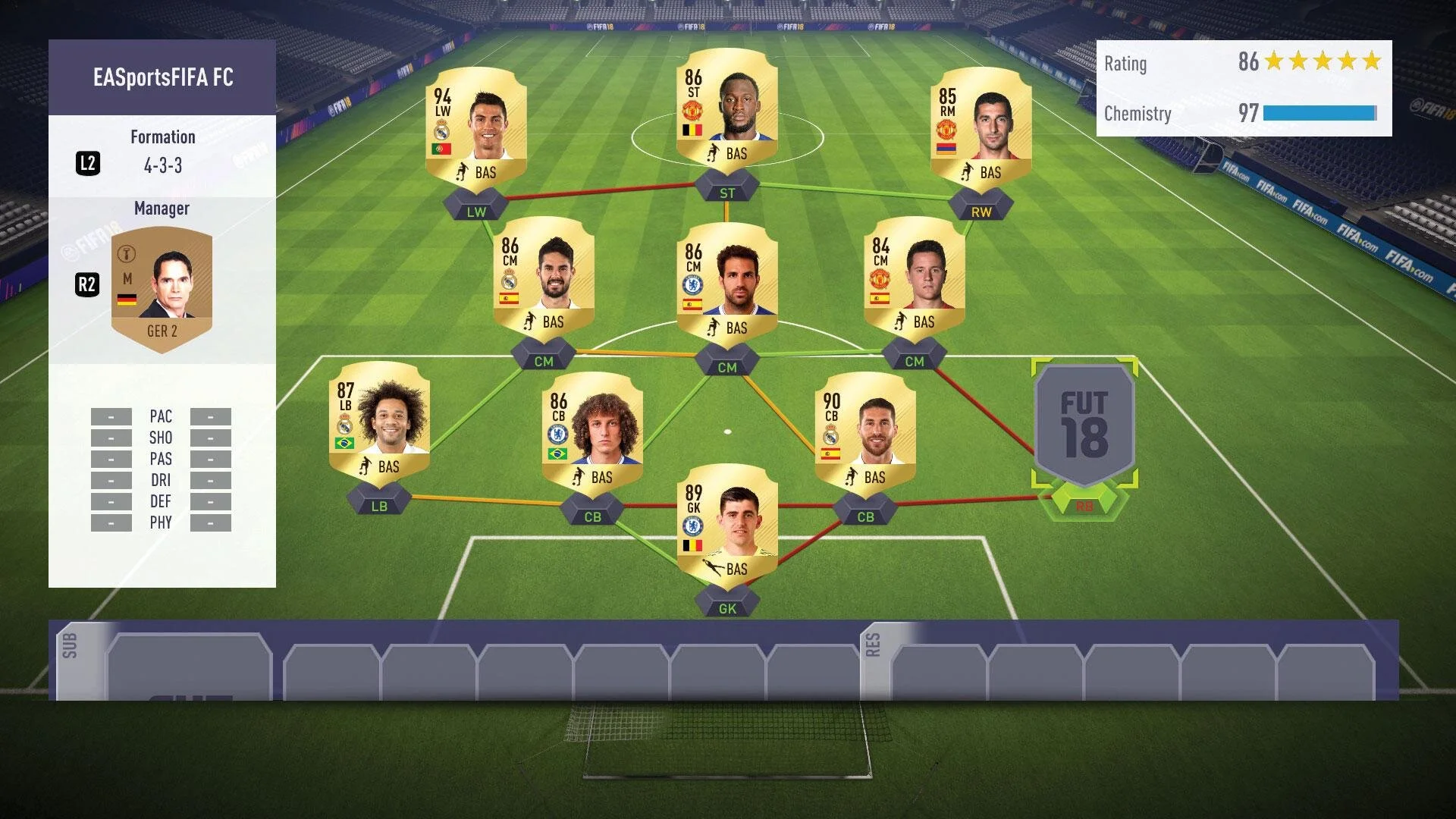
3. FIFA Ultimate Team - First Featured in FIFA 10

EA Canada, 2010. PlayStation Portable, PlayStation 3, Wii, Xbox 360. Sports Game.
There are two words to validate this game on this top ten list, let alone how high it is, and those words are not Tom Towers, they are Loot Box. The concept of buying something “blind” is not new — look no further than baseball cards sealed in foil wrapping, or gatcha machines in Japan. Putting up money first to get a guaranteed — albeit random — payoff has been a longstanding recreational pastime. There is a certain gambling quality to Loot Boxes, that no doubt provides a dopamine drop to the brain. Risking a known quantity for an unknown reward is stimulating and unlike stock trading, or other forms of gambling, Loot Boxes in video games have a low point of entry, and with digital payments there is no friction detected from giving it “just one more try”.

fut1.jpg

What is likely the most lucrative asset in EA’s current gaming lineup is their FIFA Ultimate Team, (which has the useful initialism of FUT, as in FUTball, which enables players to buy blind-packs of player cards which can be used to staff their team rosters. This feature was a logical progression of collectible sports cards (or Trading Cards) which have been sold in sealed packages, including cigarette packs, since the late 1800’s. Adding to this is the concept of opening an unknown gift, something that has kept Christmas and birthdays going for quite a while as a cultural phenomenon, not to mention the several highly successful YouTube channels devoted to opening presents and toys.

lootboxes.png

EA, observing how lucrative gambling can be for their bottom line, soon added the mode to all of their sport franchises, and then almost all of their offerings, including the staid RPG Dragon Age. Other publishers soon caught on and Loot Boxes could be found in everything from mobile games to Halo 6. For years the practice was only slightly marginalized, and obviously still very profitable for game publishers.

lootboxdragonage.jpg

Predictably, it was EA itself that killed (or at least winged) the proverbial golden goose with their release of Star Wars Battlefields 2, which took the concept too far in it’s beta release and the reaction was so intense that they removed it abruptly before the game was released. Their mistake was causing a media distraction just before Disney was about to release Star Wars: The Last Jedi. No one messes with the House of Mouse. Governments and legislators around the world woke up to the concept and finally someone was thinking of the children, those poor impressionable minds exposed to gambling. FIFA Ultimate Team deserves this high place on our list for creating the latest monetisation scheme to gaming, a trend that began with Pong.

-Phil Fog

2. Fortnite

Epic Games, 2017. Most Platforms. Battle Royale
For those who avidly follow gaming news the development of Epic Games’ Fortnite had become an inside joke. It was a game that had been in development for several years, and had gone through many iterations and challenges -- including a change in ownership and a departure of key developers like Cliff Blesinsky. For a studio that had developed popular and well -regarded games like Unreal Tournament and Gears of War, as well as a game development engine that a majority of the industry had adopted, Fortnite seemed like the company’s first failure on an epic scale.

Then, PlayerUnknown’s Battlegrounds, a 100-player deathmatch with no re-spawning, became a phenomenon.  Seeing the success of Battlegrounds, Epic re-focused their roughly six years of development into a similar “Battle Royale” mode in reportedly two weeks. Releasing the mode as free-to-play, while the more-established Battlegrounds was still asking full-price, Fortnite soon eclipsed it’s influence.  Epic’s rapid deployment across almost all available platforms, while Battlegrounds was just in the starting stages of expanding beyond the personal computer.

fortnite-2.jpg

Beyond removing barriers to entry like price and access, Fortnite also enjoyed its success due to the still fresh appeal of the Battle Royale, which was an evolution of many aspects of the online shooter genre Epic had so much success with almost twenty-years earlier with Unreal Tournament.  Fortnite’s colourful and cartoony visuals, compared to realistic military shooters, are presumably less threatening to new players (and more importantly for younger players less threatening to their parents).  

The immediate influence of the game was to spawn a countless number of games seeking to capture the same following of gamers, almost all of which have failed completely. Epic has been able to adopt the good creative components of those failed games, keeping Fortnite fresh for long-time players.

PREVIEW_SCREENSHOT2_153277_0.jpg

In many ways, Fortnite has followed the same path as World Of Warcraft. First they popularized and already existing format, they used an accessible style of art to draw in new kinds of players, their successful formula was copied repeatedly and unsuccessfully, and finally both games provide a stage for social interaction.  It’s fairly predictable that Fortnite will follow another trait of World of Warcraft and still enjoy success for years to come.
- Phil Fogg

Game Under Podcast's Top 10 Games of the 2010's - Games 7,6,5

7. The Last of Us

Naughty Dog, 2013. Playstation 3, Playstation 4. Action Adventure.
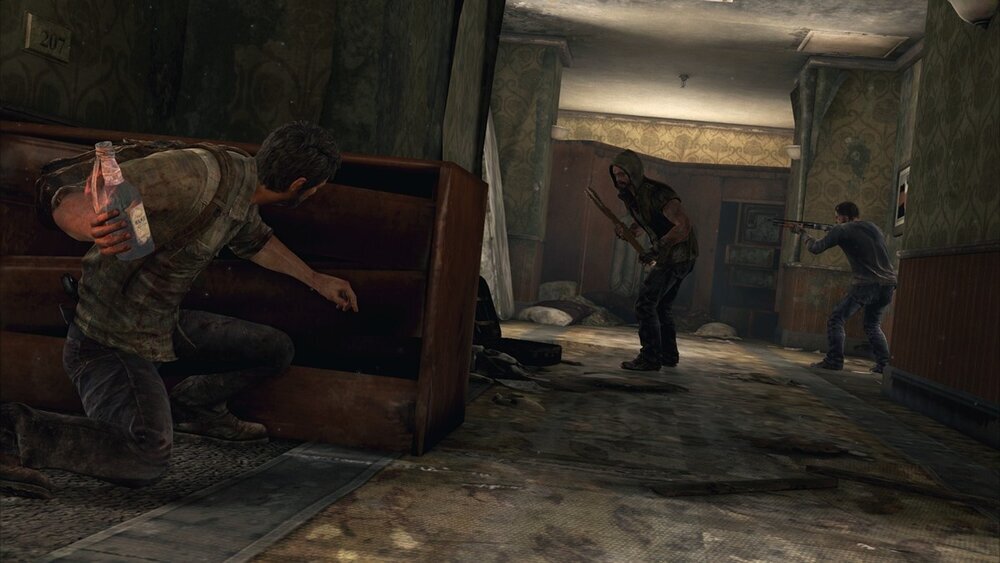
Naughty Dog, as a developer, was becoming stale. No-one acknowledged it yet [except for me-Tom Towers], but after producing top-selling franchises like Crash the Bandicoot for the original Playstation, Jak and Daxter for the Playstation 2, and the first two entries of the Uncharted series for the Playstation 3, the Californian developer was flying close to the Sun in terms of predictability and safeness. All they had to do was crank out the required third game of the Uncharted franchise and call it a generation. But shortly after the development of Uncharted 2, leadership within Naughty Dog decided to innovate by developing a second game simultaneously  for the first time in company history – The Last of Us. 

maxresdefault.jpg

Everyone that was working on the Uncharted project was not invited along for the ride, either by necessity or choice, and the result was a triple-A game that had some semblance of gameplay as well as spectacle. A triple-A game that was dark, not in the spirit of Jak II, but one that touched on the grim mundanities of day-to-day survival raised by Cormac McCarthy’s book, The Road. And after four years of development, The Last of Us enjoyed unprecedented levels of critical and commercial success, but beyond that received universal praise from all segments of the gaming community.

Directed by Bruce Straley and Neil Druckmann, they were able to make a story intended for adults commercially viable. Cutscenes no longer need to be cheesy, they could just be scenes, and feature actors who would influence the script in meaningful ways. The developers stated that they drew influence from Resident Evil 4 and Ico and like those games The Last of Us has a gravitas that is earned in moment-to-moment play. Everything the player does has an impact that is respected. My most memorable moment in the game, while lacking ammunition, was to perfectly aim a brick at an opponent’s head, surely leading to his instant demise. Instead, he took the hit and turned to fight his attacker, leaving me to run away while yelling, “Shit, shit, shit, shit, SHIT!”

cc.jpg

Every interaction with nature (including humans) is a threat to survival, and your means to overcome this is combat in some form or another, but also in providing support.

The last few moments of the game provided fodder for indignant gamers who months prior had successfully petitioned Bioware to change the ending of Mass Effect 3. That simple line of dialogue and the non-verbal response from Ellie has set the stage for the sequel, to see how that decision by Joel has played out.

The Last of Us deserves its place in this list through allowing triple-A games to cross into more mature and thoughtful content, while also leading other triple-A games into acknowledging that all games are meant to have some semblance of gameplay, and not just coast on appearance and reputation.
- Phil Fogg

6. Dear Esther

The Chinese Room, 2012 PC, Playstation 4, Xbox One. Exploration Game
The original Dear Esther was part of a PHD project on first person shooters by academic Dan Pinchbeck (not to be confused with this guy) and composer/radio presenter Jessica Curry (together they are known as the husband and wife sex-negative-developer duo, The Chinese Room). Doctor of First Person Shooting Dan Pinchbeck wanted to alter the academic discourse surrounding games from theoretical argument, to practical experimentation by taking academic questions, and making experimental mods out of them.

de1.jpg

The first experiment aimed to answer an academic question (can the first person shooter structure be inverted, and still remain a visceral experience?) was the Doom mod, Conscientious Objector. Instead of encouraging the player with the positive reinforcement and moral support of a Cortana, Conscientious Objector featured a discouraging drill sergeant disparaging the player, and instead of levels becoming progressively simpler as the player killed more and more enemies (thus simplifying the environment by removing obstacles), the player’s gun fired rubber bullets allowing him or her to progress past a single enemy, but not reduce the number of enemies (and therefore obstacles) over the course of a level.

Several experimental mods later and we arrive at Dear Esther. Inspired by environmentally rich games like Shadow of the Colossuses, S.T.A.L.K.E.R., and Metro: 2033, Dear Esther aimed to answer the question: Can you make a similarly rich environment in a game, yet remove anything resembling traditional gameplay mechanics, and still end up with an engrossing experience?

de2.jpg

What makes Dear Esther inarguably the greatest experimental game of all time, and arguably the greatest indie game of all time, is that regardless of whether your answer is yes or no, you are participating in the experiment yourself: your own take on the merits of Dear Esther is the answer to the question Dear Esther asks.

The same cannot be said of even the most divisive walking simulators that came in its wake. It is very easy to love or hate Gone Home for political or moral reasons, or to dismiss or love The Stanley Parable on the basis of it being a trite stand-up comedy routine of it’s funny because it’s true-level observational jokes (or love it for the same reason), but because the narrative of Dear Esther is essentially meaningless outside of its lyrical content, the thematic content of Dear Esther remains purely experimental.

And this is apparent in Dear Esther’s reception. As stated above, it may be no more divisive than Gone Home, but read a handful of reviews of both games and you’ll find that the division when it comes to Dear Esther is indeed primarily about the validity of walking simulators as a genre, whereas Gone Home, while still being ridiculed for being a walking simulator, manages to attract even more vitriol on the basis of its moral content.

Ultimately, the experiment was undeniably a success, commercially and critically. And for me personally, the retail version is a beautiful little jaunt through the English countryside, even more enjoyable than Fable, for instance, because it allowed you the time to wander freely and enjoy the scenery which could also be rendered in much greater detail due to not having to dilute its visual and architectural design to fit more complicated gameplay mechanics. And the original mod, with its simpler audio design and musical accompaniment, as well as its starker, darker visual design, which allowed for one’s imagination to complement its aesthetic—just as the disjointed, incomplete writing style allowed for the imagination to complement its narrative—is a masterpiece of videogame lyricism and atmosphere, even greater than the retail version. But, alas, it came out last decade, so cannot make the list.
- Tom Towers

5. Dark Souls

FromSoftware, 2011. Playstation 3, Xbox 360, PC, Playstation 4, Xbox One, Nintendo Switch . Action RPG
Souls fans are the worst. While the gaming press praised Demon’s Souls for its melancholy beauty, its intricate level design, its unique online features, its engrossing world and subtle storytelling, all that Demon’s Souls fans noticed was that it was hard. Ask them if there was anything else good about the game, and their response was, at best, yes, but did I mention just how hard it is? At worst, it was to interrogate you as to why you were such a coward as to want something out of a game other than a challenge.

By the time Dark Souls was released, all of a sudden Souls fans were engaging in some critical revisionism. Apparently critics had failed to properly appreciate Souls games, only noticing that the game was hard, whereas they, the connoisseurs that they were, had always loved the series for its melancholy beauty, its intricate level design, its unique online features, its engrossing world and subtle storytelling; sure it is indeed hard, they’d say, but there’s so much more to it than that!

In fact, Dark Souls’ reputation for being hard was such that soon any difficult game started to be compared to Dark Souls. And indeed, one of Dark Souls’ most divergent and ultimately influential design decisions was to focus on challenging the player. But more important than the difficulty, per say, was the decision to not avoid friction.

ds1.jpg

The greatest example of this is that there is very little instruction on how to play what is pretty much a rudimentary beat ‘em up in slow motion—a very weird combat system, let alone one for an RPG. Learning how long attack animations last, how far to roll out of the way of enemies, and the timing of blocks is entirely up to the player, and is by far the hardest part of the game. Once one has figured out how these basic mechanics work, then the rest of the game is as simple as learning the moves and behaviour of each new enemy one encounters. From this point on, the game really isn’t all that hard.

But the very fact that the hardest part of any Souls game is the very beginning of it, and that it is hard precisely because you must acquaint yourself with just how the game plays without any didactic hand-holding to make it any less of a frustrating experience, is an astoundingly original design decision in any decade, let alone one that prized a frictionless experience over any other consideration. The only other games that follow a similar structure are the most hardcore of sims!

While frictionless experiences still dominates the gaming landscape, Dark Souls nevertheless allowed developers to make mechanics more tactile and enemy attack patterns more complicated; there was even a little more wiggle room to make things more difficult—though not without a copious application of lube.

Shovel Knight is the quintessential post-Souls game, from the obvious aesthetic touches such as bonfires, to the more important things like its focus on precise control and complicated enemy attack patterns and intricate level design. But even though Shovel Knight was not much easier than a Souls game, it was still a frictionless experience, requiring very little time to learn how to play in spite of an unorthodox jumping mechanic and dangerous bosses; nor did it ever harshly punish the player for dying.

ds2.jpg

The revolutionary co-operative and competitive online system and the limitations it placed on player communication also paved the way for more dynamic online systems that could be adapted to fit games as diverse as Death Stranding, Sky: Children of Light and Forza Horizon!

Like the rest of our top 5, there is an argument to be made that Dark Souls isn’t just the fifth best game of the decade, but the best. However, we’ll leave that argument to be made by someone else.

- Tom Towers